
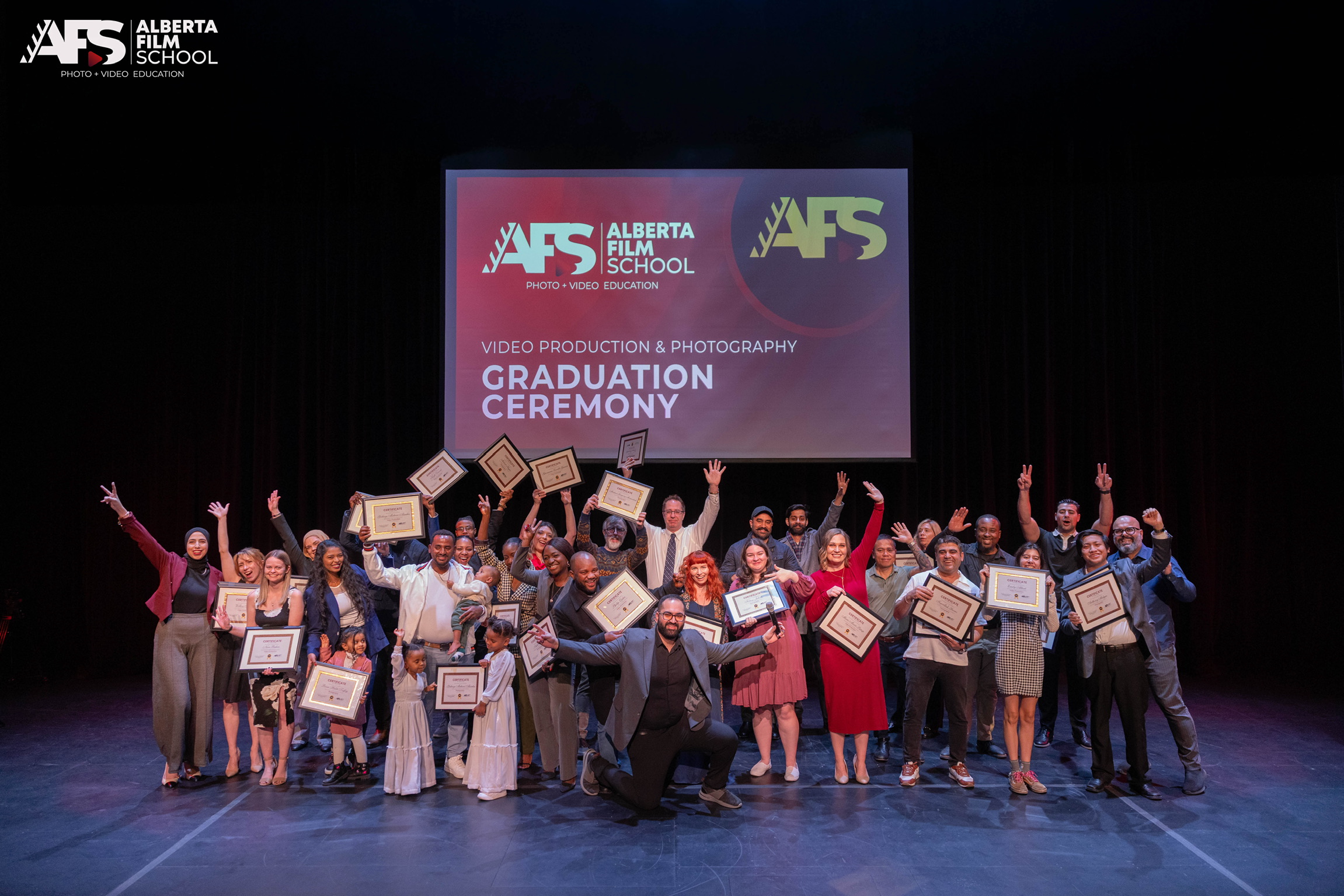
Less Talking, More Shooting: Inside Alberta Film School
Muhamed was always the one behind the camera at family functions. He taught himself the craft under a string of mentors, on real sets, while some of his friends spent four years in traditional film programs. The funny part, he says, is that by the time they graduated, they were working for him — he was the one with the hands-on experience and the opportunities. That lesson became the whole idea behind Alberta Film School.
Tucked into the Orange Hub, the school teaches photography, video, and film the practical way: a camera in your hands from day one, not three months of lectures first. We talked with Muhamed about building an easy way into the industry, why he sends students out on real shoots across the city, and the motto the whole place runs on — less talking, more shooting.
 Visit Alberta Film School
The Orange Hub, 10045 156 St NW, Edmonton
 albertafilmschool.com
 @albertafilmschool
From Behind the Camera to His Own School
What inspired you to start Alberta Film School?
When people wanted to get into the industry, whether photo or video, there really wasn't a ground-zero place to start. You had to watch hundreds of YouTube videos, scavenge the internet, or find a mentor. We wanted to build a friendly environment with an easy starting point. Some programs hand you a giant cinema camera on day one, which never made sense to me — you don't even know how to put the battery in yet. So we break it down, take it slow, and try not to make anything scary, no matter the student's age.
Do you have a background in photo and video?
It started the way it does for a lot of people — I was always the one behind the camera at family functions. I picked one up and knew I wanted to do it, but I didn't know how to get in. I was lucky to study under a lot of mentors and learn hands-on. Some of my friends went the traditional route, four years of school. The funny thing is, because I had so much practice on real sets, by the time they graduated they were working for me. That's why I wanted a different approach. A lot of places are traditional — you might spend three months learning the history of film before you touch a camera. We're hands-on from day one. About 75 per cent of our program is. We introduce a topic, learn it, then we're running around campus practicing it, and editing from week one.
Less Talking, More Shooting
Why does hands-on matter so much?
Nothing gives you confidence with a camera like actually holding it. I tell students, I can teach you a lot, but if you go home and watch YouTube videos, you won't pick it up. You have to have your hands on the camera. One of our students, Mad, said something I love: she used to feel like her camera controlled her, but by the end of the program, she felt like she could finally control it. That's the whole thing — knowing you're in control when you're out in the field.
Everyone Leaves With a Portfolio
What's something you do that's different?
We make sure everyone leaves with a portfolio. When I was trying to get jobs, everyone asked for a link, a portfolio, samples. So you build yours throughout the program. In our photography program we have Portfolio Week; a free photo-shoot event the community loves, where people book free shoots for anything they want, and our students get more photos in a week than some photographers get in a year or two. We also built our own software, so every student gets a dashboard — basically their own mini portfolio site they can customize, free, with their photos and videos and a shareable link. It even includes invoicing, pricing, and contract tools. And we promote students on our website so they can get hired. Nothing beats leaving school with a portfolio already built.
More Than One Way In
What all do you offer?
A few paths. On the school side, we have photography, video production, and film production programs, each about two months, Monday to Friday, with day classes (10 a.m. to 4 p.m.) or evening classes (5 to 9 p.m.). Some students do both photo and video — our dual path — and are enrolled for four months. Placements and internships are a big part of it.
We send students across the city to community partners matched to what they're into, whether that's set work, cars, weddings, or studio portraits. On weekends we run workshops for people who can't do a full program — content creation is a popular one, plus photo editing, video editing, podcasting, and real estate videography. And through our nonprofit, the AFS Foundation, we run free community classes every week on camera basics which includes ISO, aperture, and shutter speed. A lot of people end up enrolling once they see how much they learn in a free 90-minute class.
We cut the fluff, too, with no electives wasting your time or money, and we teach the business side, because whether you want to make films for Hollywood or shoot for local businesses, you have bills to pay.
Rooted in the Orange Hub
Why was being in this area important?
This area is full of art organizations, local businesses, nonprofits, and Indigenous organizations, and even some film-industry neighbours. We're in the Orange Hub, which is a unique ecosystem — we've probably worked with everyone in the building. Our students have done free and paid shoots for organizations here. They can literally go upstairs, ask to make a video, and start building a portfolio. The area's growing, too, especially with the new LRT connecting the city. It's a great spot, and we love working with everyone around here.
What would you tell someone curious about film school but unsure it's for them?
First, it's not as scary as it seems. You just have to pick up a camera and start. We begin at square one, form how to use the camera and accessories, exposure, all the way to professional work. If you want to test the waters, we run a free class every Tuesday at 2 p.m. called Camera Basics, about 90 minutes on manual settings and getting off auto mode. Book it on our website, come check out the campus, meet other people in the industry, and see if you vibe with our style. Even if you just want a campus tour, we'd love to show you around.
Alberta Film School runs on that one motto: less talking, more shooting. Whether you want to take better photos of your family or build a career behind the camera, there's a way in — a full program, a weekend workshop, or a free Tuesday class to start. The school has also just launched memberships for its studio spaces, editing suites, and podcast rooms. The next intakes are September 21 and November 6, and Portfolio Week runs October 19 to 23. Drop by the Orange Hub campus, pick up a camera, and see what you make.